






SPF 50: The Definitive Guide to Advanced Sun Protection in 2026
 What if the most powerful anti-ageing treatment for your skin costs less than £30 and takes only seconds to apply each morning? We understand the journey to finding the perfect daily sun protection can feel endless. You've likely tried formulas that feel heavy, leave a chalky white cast, or worse, cause unexpected breakouts. The frustration is real, and it often leads to skipping the single most crucial step in your skincare ritual, leaving your skin vulnerable.
This guide is your definitive map to a truly radiant complexion. We will demystify the science behind a high-factor spf 50, revealing why it’s the non-negotiable gold standard for preserving your skin’s long-term health. You will discover how to choose a bespoke formula that feels like luxury skincare and works in harmony with your makeup, finally ending your search. Together, we'll explore everything from UVA versus UVB rays to application techniques that ensure a flawless, protected finish all day long.
Key Takeaways
- Uncover why leading dermatologists consider a high-protection formula the cornerstone of modern skincare, shielding your complexion from more than just the sun's burning rays.
- Discover the key differences between mineral and chemical sunscreens to confidently select a bespoke shield that feels truly tailored to your skin's unique needs.
- Master the art of application and learn precisely how much spf 50 is required to achieve the full protection stated on the bottle for truly radiant, safeguarded skin.
- Understand how the latest advancements in sun care combine powerful clinical filters with luxurious, skin-loving ingredients to elevate your daily wellness ritual.
What is SPF 50 and Why is it the Gold Standard for Your Skin?
Think of your daily skincare not as a routine, but as a ritual of preservation. At the heart of this modern wellness journey lies one non-negotiable element for radiant, healthy skin: a high-protection sunscreen. While the numbers on the bottle can feel complex, understanding what SPF 50 is and why it's the gold standard for your skin empowers you to make the most profound investment in your long-term complexion. By 2026, the conversation around sun protection has evolved from a simple holiday measure to a sophisticated, daily act of self-care.
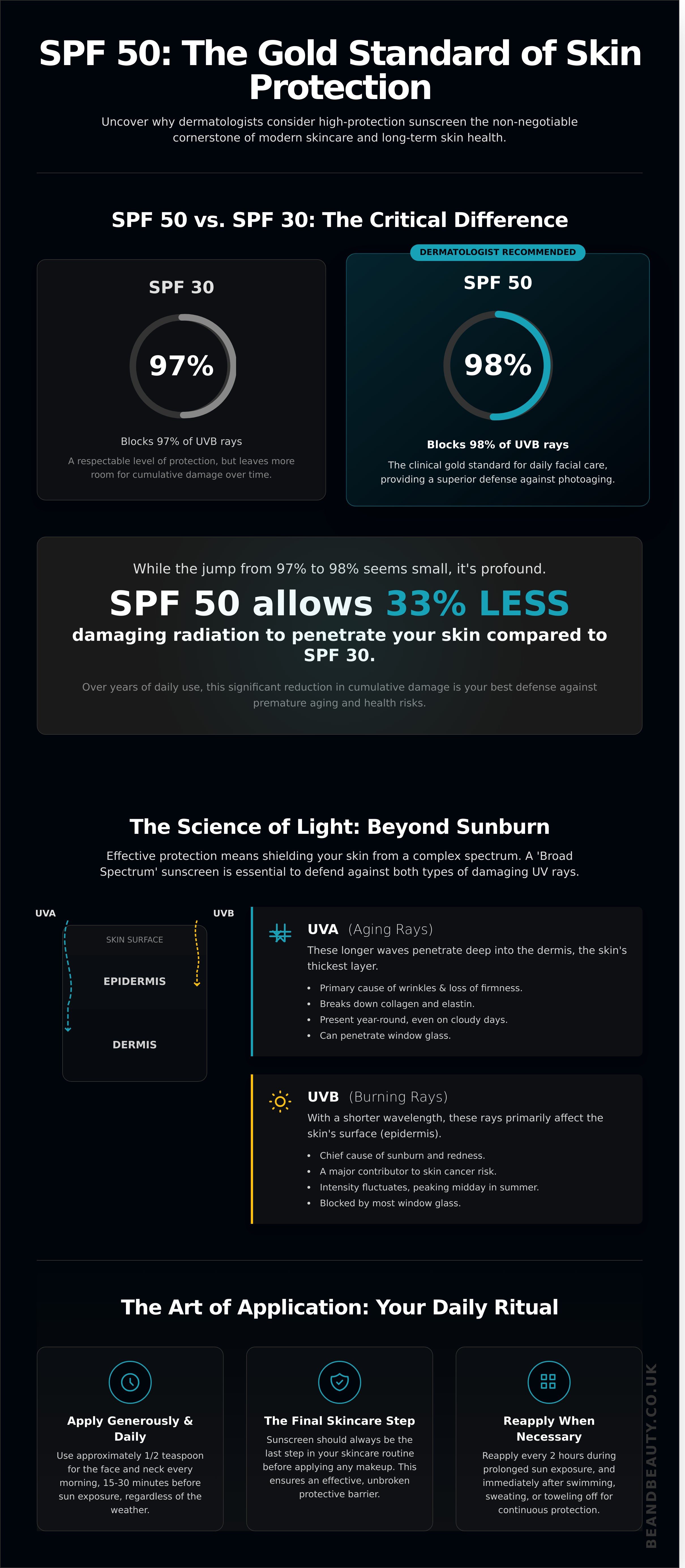
Technically, Sun Protection Factor (SPF) measures how long it would take for the sun’s UVB radiation to redden your skin versus the time it would take without any protection. An spf 50 formulation, when applied correctly, allows you to stay in the sun 50 times longer without burning. More importantly, it’s about filtration. An SPF 50 product blocks approximately 98% of the sun’s harmful UVB rays. This is a critical shield against the primary cause of sunburn and a major contributor to skin cancer risk.
Many people wonder if the leap from SPF 30 is truly significant. The numbers tell a compelling story. While an SPF 30 blocks a very respectable 97% of UVB rays, that extra 1% of protection offered by SPF 50 is a game-changer. It means an SPF 50 formula allows 33% less damaging radiation to penetrate your skin. Over months and years of daily exposure, this reduction in cumulative damage is profound, significantly lowering your risk of photoaging, hyperpigmentation, and long-term health complications. This is precisely why the clinical consensus in UK dermatology has shifted. The advice is no longer just for the beach; it’s for every single day, even the overcast ones, as a fundamental step in your bespoke skincare plan.
De-coding the SPF Number System
Your journey to perfect protection begins with understanding the label. It’s crucial to look for ‘Broad Spectrum’ protection, which ensures your sunscreen shields you from both types of damaging UV light. Here’s the difference:
- UVB Rays: The chief cause of sunburn and redness. The SPF number (like 50) primarily indicates the level of protection from these rays.
- UVA Rays: Penetrate deeper into the skin, causing premature ageing, wrinkles, and loss of elasticity. They are present year-round, even on cloudy days.
UK dermatologists now recommend SPF 50 over 30 for daily facial care because the face is constantly exposed and its skin is more delicate, making it more susceptible to cumulative UVA and UVB damage.
The Emotional Value of High Protection
Embracing a high-factor sunscreen is about more than just clinical prevention; it’s about the peace of mind that comes from knowing you are actively preserving your skin's vitality. This daily act of care allows you to face the day with confidence, safeguarding your skin's natural resilience and luminosity against environmental stressors. It empowers your skin to rejuvenate and thrive, ensuring your complexion remains as vibrant as you feel.
Ultimately, applying a high-quality SPF 50 each morning is the single most effective insurance policy for your complexion's future radiance and health.
The Science of Light: Beyond Just Sunburn
Your daily walk through London or Manchester exposes your skin to far more than just the warmth of the sun. True skin wellness begins with understanding that effective protection isn't merely about preventing a painful sunburn; it’s about creating a sophisticated shield against a complex spectrum of environmental aggressors. The light that touches your skin is composed of different wavelengths, each with a unique impact on your skin's health and radiance.
To truly protect your skin, you must first understand what you're shielding it from. The two most well-known types of ultraviolet (UV) radiation are:
- UVA (Aging Rays): These longer waves penetrate deep into the skin's dermis. They are the primary culprit behind the breakdown of collagen and elastin, leading to fine lines, wrinkles, and loss of firmness. UVA rays are present with consistent intensity during all daylight hours, year-round, and can even penetrate clouds and glass.
- UVB (Burning Rays): With a shorter wavelength, these rays affect the skin's surface, causing redness, sunburn, and playing a key role in the development of skin cancer. Their intensity fluctuates, peaking midday during the spring and summer months.
A broad-spectrum sunscreen is designed to protect you from both. Yet, the science of protection has evolved. We now recognise that UV rays are only part of the story. High-Energy Visible (HEV) light, also known as blue light, and Infrared-A (IRA) radiation also contribute to premature aging by generating free radicals-unstable molecules that damage skin cells. This detailed understanding of The Science of Light: Beyond Just Sunburn is what informs the next generation of skin protection.
Photo-Aging and the Urban Environment
City living presents a unique challenge for your skin. A 2016 study in the Journal of Investigative Dermatology revealed that an increase in traffic-related air pollution was linked to a 20% increase in pigment spots. Microscopic pollution particles, known as PM2.5, act like tiny sponges for toxins, which then cling to your skin. When exposed to UV light, these particles amplify oxidative stress, accelerating the degradation of your skin’s vital support structure. This is why the term 'Urban Sunblock' is set to become a key part of our vocabulary by 2026, describing formulas specifically designed to combat this dual assault of UV and pollution.
Blue Light and Digital Aging
With UK adults spending, on average, over four hours a day in front of screens according to Ofcom's 2023 data, the effects of HEV (blue) light are a growing concern. While less intense than UV, this constant, close-range exposure is linked to hyperpigmentation and oxidative stress. In response, the most advanced spf 50 formulas are now being tailored to include powerful antioxidants and specific filters that help neutralise the effects of blue light. This is where the synergy of a potent antioxidant like Vitamin C becomes essential. It acts as a secondary line of defence, rejuvenating your skin and boosting your sunscreen’s efficacy for a truly radiant, urban-proof complexion. Understanding your unique environmental exposure is the first step, and our bespoke skin consultations can help tailor a protective strategy just for you.
Choosing Your Bespoke Shield: Mineral vs. Chemical SPF 50
Selecting the right sunscreen is a deeply personal choice, tailored to your unique skin and lifestyle. The foundation of this decision lies in understanding the two primary types of UV filters: mineral and chemical. Each offers a distinct mechanism of protection, and your ideal shield depends entirely on what your skin needs to feel comfortable, protected, and truly radiant.
Mineral sunscreens, often called physical blockers, create a protective barrier on your skin's surface. Think of them as microscopic mirrors. Their active ingredients, Zinc Oxide and Titanium Dioxide, sit atop the skin to physically deflect and scatter damaging UV rays before they can penetrate. For years, these filters were associated with a thick, chalky finish. However, formulations developed since 2022 use micronized particles, creating sophisticated, lightweight textures that blend seamlessly, making the dreaded 'white cast' a relic of the past for most skin tones.
Chemical sunscreens work in a completely different, yet equally effective, way. Instead of blocking rays, they act like a sponge. These organic compounds, such as Avobenzone and Octisalate, absorb UV radiation as it enters the skin. They then trigger a chemical reaction that converts the UV rays into heat, which is released from the skin. Understanding the science behind these two approaches is key. As detailed by experts at the Cleveland Clinic, the debate of mineral versus chemical sunscreen highlights how both are effective; the best choice is simply the one you'll wear consistently.
SPF 50 for Acne-Prone and Oily Skin
If your skin is prone to breakouts or excess shine, the texture of your spf 50 is paramount. Look for formulas labelled "non-comedogenic," a clinical term meaning they won't clog your pores. An oil-free, lightweight fluid will provide robust protection without feeling heavy, leaving a soft, matte finish that controls shine. This must be supported by a proper cleansing routine; discovering the Best Cleanser for Acne Prone Skin in the UK ensures your pores remain clear.
Solutions for Sensitive and Atopic Complexions
For skin that reacts easily or is prone to conditions like eczema or rosacea, mineral filters are often the superior choice. Zinc Oxide, in particular, is celebrated for its calming properties and is less likely to cause irritation. To ensure daily comfort, always select a product that is explicitly fragrance-free and hypoallergenic. This gentle-first approach is a cornerstone of Caring for Dry, Sensitive & Atopic Skin, where minimising potential irritants is the key to serene, healthy skin.
The Art of Application: How to Use SPF 50 for Maximum Efficacy
You’ve chosen a high-quality sunscreen, a vital step in your commitment to skin wellness. But its true power lies in the application. Think of it not as a chore, but as a daily ritual, a moment of self-care that shields your skin’s future. To truly benefit from the protection stated on the bottle, a thoughtful technique is essential. It’s the difference between adequate and exceptional defence for your skin.
Are you applying enough product to achieve the full benefits of your spf 50? The clinical standard for testing is 2 milligrams of product per square centimetre of skin. For your face and neck, this translates to the simple yet effective 'Two-Finger Rule'. Dispense a line of sunscreen along the full length of your index and middle fingers. This amount, approximately a quarter-teaspoon, ensures you are creating a resilient shield, not just a whisper of protection. Anything less significantly compromises the SPF rating.
Timing is also a crucial element of your protection strategy. For most chemical sunscreens to work effectively, they need around 20 minutes to bind with your skin and form a protective filter. Apply it as a final step in your morning routine before you even think about leaving the house. And don’t forget the often-missed areas where sun damage first appears: your delicate eyelids, the tops of your ears, and the back of your neck. These zones deserve the same meticulous care.
Reapplication is your key to sustained protection. For a busy professional, a mineral powder SPF or a fine mist spray can be gracefully applied over makeup throughout the day. If you lead an active lifestyle, or on warm days, you must reapply every two hours, and immediately after swimming or heavy perspiration, as per NHS guidelines.
Layering SPF 50 in Your Skincare Routine
Integrating sunscreen into your morning ritual should feel seamless and luxurious. The correct order ensures each product performs optimally, creating a foundation for radiant skin. Your daily sequence should be:
- Step 1: Cleanser
- Step 2: Serum(s)
- Step 3: Moisturiser
- Step 4: Your SPF 50 Shield
To prevent pilling or sliding when applying makeup, allow your sunscreen to set for at least 5-10 minutes. This creates a smooth, grippable canvas. When applying foundation, use a gentle patting or stippling motion with a sponge or brush, rather than rubbing, to keep your protective layer perfectly intact.
The 365-Day Rule
Sun protection isn’t just for sunny holidays; it’s a year-round commitment to your skin’s health, especially here in the UK. Damaging UVA rays, the primary cause of premature ageing, are persistent. They penetrate cloud cover with ease, with up to 80% reaching your skin even on the greyest of winter days. They also pass through glass, meaning you’re exposed while driving or sitting by a window at home or in the office. UV damage is cumulative and occurs even on overcast days, silently contributing to the loss of skin elasticity and radiance over time. Maintaining your glow and preventing future damage requires this daily, non-negotiable step. Your skin will thank you for this consistent care for years to come. Discover how to integrate the perfect sun protection into your bespoke skincare journey by scheduling a personal consultation with our experts.
Experience the Be & Beauty Difference: Novaclear Urban Sunblock
Your search for the perfect daily shield ends here. At Be & Beauty, we understand that true skin wellness is born from a blend of scientific efficacy and a touch of everyday luxury. That is why we wholeheartedly recommend the Novaclear Urban Sunblock. This isn't just another sunscreen; it's a sophisticated, tailored defence system designed for the demands of modern life, delivering clinical-grade protection with an elegance you'll adore applying each morning.
This formula represents our core philosophy: empowering you with solutions that are both effective and a joy to use. It moves beyond simple UV defence to offer a comprehensive approach to skin health, ensuring your complexion remains radiant, resilient, and beautifully protected, day in and day out.
The true genius of the Novaclear Urban Sunblock lies within its meticulously crafted formula. It combines high-performance, broad-spectrum filters with a curated selection of nurturing ingredients. This dual-focus ensures your skin receives complete care against environmental aggressors.
- Advanced Sun Filters: A robust system provides powerful, photostable protection against the full spectrum of UVA and UVB radiation, preventing premature ageing and cellular damage. This is the cornerstone of any effective spf 50 formulation.
- Hyaluronic Acid: A powerhouse of hydration, this molecule draws moisture into the skin, plumping fine lines and maintaining a supple, dewy texture throughout the day. It counteracts the drying effects of both sun and indoor environments.
- Rice Extract: Celebrated for its soothing and antioxidant properties, rice extract helps to calm the skin and neutralise free radicals generated by pollution and UV exposure, supporting a brighter, more even-toned complexion.
This intelligent combination is specifically engineered for the city dweller. Your skin faces a daily onslaught not just from the sun, but from particulate matter (like PM2.5) and environmental pollutants that can accelerate ageing and cause irritation. Novaclear Urban Sunblock creates an invisible, breathable barrier, safeguarding your skin’s integrity so you can navigate your day with confidence. Every product we endorse, including this exceptional spf 50 sunblock, is dermatologically tested to guarantee its safety and performance, reflecting our unwavering commitment to your skin's long-term health.
Why Novaclear is a Cult Favourite
Its devoted following is built on a simple premise: superior protection shouldn't feel like a chore. The formula’s lightweight, non-greasy texture absorbs instantly, feeling more like a premium moisturiser than a traditional sunblock. It provides a perfect, non-pilling base for makeup while actively shielding you from both UV rays and urban pollution. This dual-action approach is essential, as we explore in our guide on Why Urban Sunblock is Crucial for City Life.
Your Journey to Radiant Skin Starts Here
Choosing the right sun protection is a vital step in your personal wellness journey. At Be & Beauty, we are your partners in cultivating lasting skin health and the confidence that comes with it. We believe in providing bespoke advice tailored to your unique needs, because your skin is unlike any other. Let us help you build a routine that not only protects but also rejuvenates. Explore our curated SPF 50 collection today and discover your perfect shield.
Your Bespoke Shield for a Radiant Tomorrow
Your journey to lasting skin wellness begins with a single, powerful step. You've learned that true sun protection goes beyond the bottle; it’s about understanding how a superior formula, which blocks approximately 98% of UVB rays, works for your unique skin. The key is pairing the right shield with the art of dedicated application, turning a daily routine into a ritual of self-preservation.
At Be & Beauty, we translate this science into a tangible, luxurious experience. Our UK-based clinical expertise guides our curation of dermatologically tested formulas, with a specialisation in advanced ranges like Novaclear. We believe your daily spf 50 shouldn't just be a shield; it should be a bespoke moment of care that enhances your natural glow.
Protect your radiance with our expert-approved SPF 50 range.
Your path to protected, luminous skin is clear. Embrace your future with confidence.
Your Sun Protection Questions, Answered
Is SPF 50 better than SPF 30 for daily use?
Yes, SPF 50 offers superior protection for daily use, providing a vital safeguard for your skin's long-term health. While SPF 30 blocks approximately 97% of UVB rays, SPF 50 blocks around 98%. This seemingly small 1% increase actually reduces your UV radiation exposure by 50% compared to SPF 30. The British Association of Dermatologists recommends this higher factor for optimal defence against premature ageing and sun damage, helping you maintain a truly radiant complexion.
Does SPF 50 prevent tanning completely?
No, SPF 50 does not prevent tanning entirely because no sunscreen can offer 100% protection. It filters out about 98% of UVB rays, but the remaining 2% can still penetrate the skin and stimulate melanin production. Remember, a tan is your skin’s response to cellular damage from UV radiation. Your focus should always be on protecting your skin's health and integrity, which is the true foundation of lasting beauty, rather than achieving a temporary tan.
Can I use SPF 50 instead of a moisturiser?
This depends on your unique skin type and the product's formulation. Many modern sunscreens are enriched with hydrating ingredients like hyaluronic acid and ceramides, which may be sufficient for those with normal to oily skin. However, if your skin is dry or dehydrated, you'll achieve the best results by layering your SPF over a bespoke moisturiser. This ensures your skin barrier remains nourished, supple, and perfectly prepped for flawless protection throughout the day.
How often should I reapply SPF 50 if I'm indoors most of the day?
You should reapply your sunscreen every 2 to 4 hours, even when you are primarily indoors. UVA rays, which account for up to 95% of the UV radiation reaching the Earth's surface, can easily penetrate standard window glass. If your desk or favourite chair is near a window, your skin is still exposed. A quick reapplication around midday is a simple, elegant step in your daily wellness ritual to ensure continuous, seamless protection.
Will SPF 50 cause breakouts on my acne-prone skin?
Not necessarily; the key is choosing a formula tailored to your skin’s needs. Breakouts are often triggered by comedogenic (pore-clogging) ingredients, not the SPF level itself. We recommend seeking out oil-free and non-comedogenic formulas. Mineral sunscreens containing zinc oxide are often exceptionally well-tolerated by sensitive and blemish-prone skin, offering gentle yet effective protection without compromising your skin's clarity. Finding the right product is part of your personalised skincare journey.
What is the difference between sunblock and sunscreen?
The primary difference lies in how they protect your skin. Sunblock, or mineral sunscreen, creates a physical barrier using ingredients like zinc oxide to deflect UV rays. Sunscreen, or chemical sunscreen, works by absorbing UV radiation and converting it into heat. In the UK and EU, regulations now favour the universal term "sunscreen," so it’s more helpful to distinguish between "mineral" and "chemical" formulas to find the one that feels most luxurious and effective for you.
Is it safe to use SPF 50 on children and babies?
Yes, using a high-factor SPF 50 is both safe and highly recommended for children, but the formulation you choose is critical. The NHS advises keeping babies under 6 months completely out of direct sun. For older babies and children, always select a gentle, mineral-based sunscreen designed specifically for their delicate skin. These formulas use zinc oxide or titanium dioxide and are free from fragrance, making them ideal for preventing irritation while providing robust protection.
Does SPF 50 expire, and how can I tell?
Yes, your SPF 50 absolutely expires, and its active ingredients lose their efficacy over time. In the UK, all cosmetic products, including sunscreen, must display a 'period after opening' (PAO) symbol. This looks like a small open jar with a number followed by "M" (e.g., "12M"), indicating it should be used within 12 months of opening. If you notice any change in the product's colour, texture, or scent, it’s time to replace it.


