






How to Repair a Damaged Skin Barrier: A Sophisticated 2026 Restoration Guide
What if the very products you trust to soothe your face are actually the reason your skin feels like it’s constantly on fire? You’ve likely experienced that disheartening sting when applying a basic moisturizer or noticed rough, flaky patches that refuse to fade regardless of how much oil you apply. It’s a vulnerable feeling when your complexion becomes a source of discomfort rather than confidence. If you’re searching for how to repair damaged skin barrier health, you deserve a solution that blends clinical expertise with a sense of calm, luxurious tranquility.
With the May 1, 2026, Omnibus VIII regulations now mandating the removal of several irritants from the market, there has never been a better time to audit your vanity. This guide promises to reveal the bespoke rituals and lipid-rich science required to transform your reactive skin into a resilient, radiant shield. We’ll preview the essential "skin sabbatical" approach, discuss the importance of the new fragrance allergen disclosures, and provide a tailored routine that delivers a calm, rejuvenated complexion within two to four weeks. Your journey toward a more confident, healthy glow starts with understanding exactly what your skin needs to heal.
Key Takeaways
- Identify the subtle signs of a compromised stratum corneum to determine if your complexion requires a specialized restoration journey.
- Master the clinical "bricks and mortar" science to understand exactly how to repair damaged skin barrier health using a precise trio of essential lipids.
- Embrace the "skin sabbatical" by learning which popular active ingredients to temporarily pause to prevent further irritation and heat.
- Implement a bespoke four-step ritual that prioritizes lipid-replenishing cleansing and the soothing benefits of panthenol and niacinamide.
- Discover tailored clinical solutions, such as the Novaclear Atopis range, to soothe persistent flushing and rejuvenate your skin’s protective shield.
Recognising the Signs: Is Your Skin Barrier Compromised?
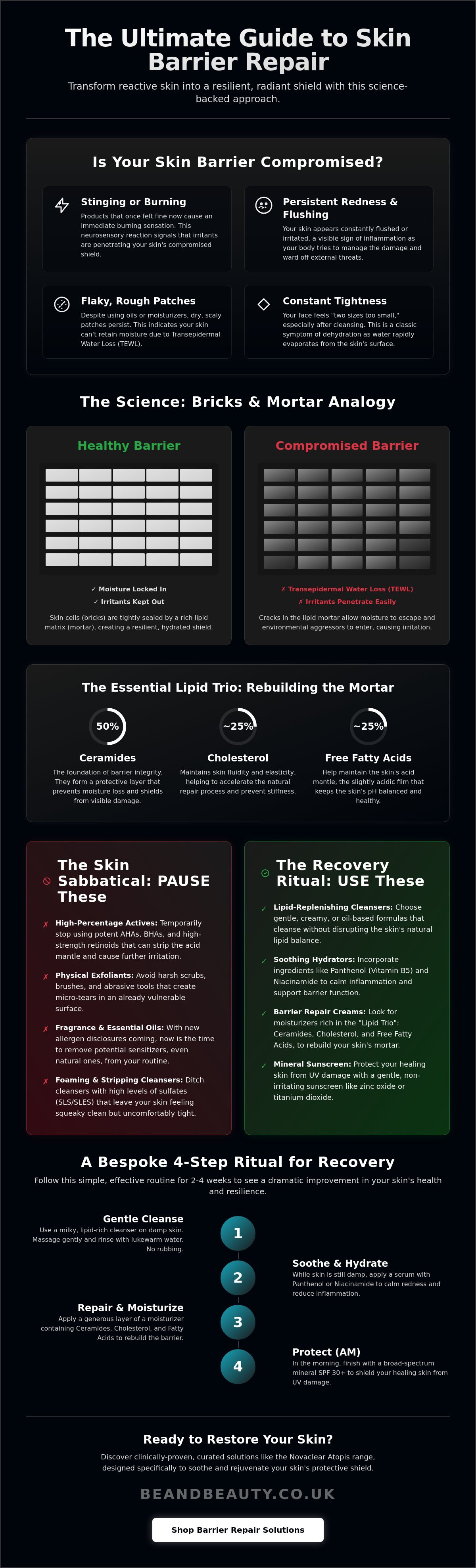
Your skin is more than just a surface; it’s a sophisticated ecosystem. At its heart lies the stratum corneum, often referred to as the skin's outermost layer. This microscopic shield acts as your body’s essential frontline defense, keeping vital moisture in and environmental aggressors out. When this shield is intact, you enjoy a radiant, resilient glow. However, when it’s compromised, the results are both visible and deeply uncomfortable. Understanding how to repair damaged skin barrier health begins with identifying the difference between naturally dry skin, which lacks oil, and a damaged barrier, which is unable to retain water due to Transepidermal Water Loss (TEWL).
To better understand this concept and see the reset in action, watch this helpful video:
The Sensory Symptoms of Barrier Distress
If your face feels two sizes too small immediately after cleansing, you’re likely experiencing barrier distress. This persistent tightness occurs because water is evaporating through microscopic gaps in your skin’s surface. You might notice that products you once loved now cause an immediate, unexpected burning sensation. The stinging response is a neurosensory reaction to barrier gaps. It’s a clear signal that your protective shield is no longer keeping irritants at bay. This isn't just simple sensitivity; it's a plea for a tailored, empathetic approach to wellness.
Common Culprits: How Damage Happens
The journey to a compromised barrier often starts with good intentions. The 2026 "glass skin" obsession has led many to over-exfoliate with high-percentage AHAs and BHAs, stripping the acid mantle until it can no longer rejuvenate itself. Environmental factors also play a significant role. Harsh UK winters and the dry heat of indoor radiators create a perfect storm for TEWL, especially as we navigate the new safety standards of the May 1, 2026, cosmetic regulations. Additionally, the rise of high-strength retinoids without adequate buffering has left many complexions feeling vulnerable and raw.
Repairing your skin requires more than just adding moisture. It demands a psychological shift toward a "skin sabbatical." You must resist the urge to "fix" irritation with more active treatments. Instead, embrace a period of luxurious tranquility where you prioritize clinical-grade lipid replenishment. Learning how to repair damaged skin barrier function is about choosing a bespoke path that respects your skin’s natural rhythm and focuses on long-term resilience over temporary results.
The Science of Restoration: Lipids, Ceramides, and Mortar
Imagine your skin as a masterfully constructed wall. In dermatological circles, we often use the "bricks and mortar" analogy to describe the stratum corneum. Your skin cells, or corneocytes, act as the bricks, while a complex matrix of lipids serves as the mortar. When this mortar is rich and intact, it locks in moisture and keeps irritants out. However, if the mortar cracks, you develop a "leak." This is why simply splashing water or applying a lightweight mist won't solve the issue. To understand how to repair and care for your skin barrier, you must address the structural integrity of this lipid mortar rather than just chasing temporary hydration. Without the right lipids, moisture escapes as quickly as you apply it.
The Lipid Trio: Why Ratios Matter
Restoring your skin's resilience requires a precise blend of three essential lipids: ceramides, cholesterol, and free fatty acids. Ceramides, specifically types 1, 3, and 6-II, are the foundation of barrier integrity, typically making up about 50% of the lipid matrix. Cholesterol plays a vital role in maintaining membrane fluidity, ensuring your skin can repair itself at a natural, healthy speed. Meanwhile, fatty acids provide the slightly acidic environment your acid mantle needs to thrive. Many mass-market products focus solely on ceramides, but a truly bespoke approach recognizes that these lipids must exist in a specific ratio to be effective. Without this balance, your skin remains vulnerable to the stinging and flakiness we identified as primary signs of distress.
Humectants vs. Occlusives: The Two-Step Seal
While humectants like hyaluronic acid and glycerin are excellent for drawing moisture into the skin, they can actually worsen dehydration if they aren't sealed correctly. Without an occlusive "lid," that newly drawn water evaporates into the air through Transepidermal Water Loss. This is where bio-identical lipids like squalane become invaluable. Squalane mimics your skin's natural sebum, providing a silky, non-greasy seal that locks in your treatment. These atopic skin care principles are the gold standard for anyone learning how to repair damaged skin barrier function. By layering a humectant serum under a lipid-rich cream, you create a tailored environment for your skin to rejuvenate and heal.
Your skin’s Natural Moisturising Factors (NMF), including amino acids and minerals, also require this lipid shield to maintain elasticity and comfort. If you're feeling overwhelmed by the science, remember that a simplified, professional routine is often the most effective path. You might consider exploring our curated selection of barrier-supportive formulas to help bridge the gap between clinical care and daily wellness. By choosing products that respect the skin's biological ratios, you invite a sense of tranquility back to your complexion.
The Skin Sabbatical: What to Remove from Your Ritual
Healing begins with a profound psychological shift. When your complexion is in distress, the natural impulse is often to apply more products to "fix" the irritation. However, true restoration requires a "skin sabbatical." This is a purposeful, temporary pause on corrective treatments, allowing your biological repair mechanisms to function without interference. Understanding how to repair damaged skin barrier health means recognizing that sometimes, the most sophisticated action you can take is to do less. By stripping your ritual back to the bare essentials, you create a sanctuary for your cells to rejuvenate in peace.
The 'Pause' List: Ingredients to Avoid
Even ingredients celebrated for their radiance-boosting properties can become inflammatory when the stratum corneum is compromised. L-Ascorbic Acid, the most common form of Vitamin C, typically requires a low pH of around 3.5 to penetrate effectively. On a healthy face, this acidity is manageable; on a broken barrier, it's an unnecessary stressor that triggers a stinging response. Similarly, retinoids and hydroxy acids must be benched for at least 21 to 28 days, matching the natural rhythm of your skin's renewal cycle. Physical scrubs and high-pH foaming cleansers are particularly dangerous during this phase. A scrub acts like sandpaper on a wounded surface, creating micro-tears that invite bacteria. You should also be wary of "hidden" irritants like denatured alcohol, which strips away remaining lipids. Essential oils, while providing a sensory experience, frequently trigger allergic contact dermatitis in weakened skin, leading to persistent heat and redness.
The Transition: When to Reintroduce Actives
Knowing when to end your sabbatical is a matter of intuitive observation. Look for the return of a natural, healthy glow and the complete absence of stinging when you apply your daily cream. Once your skin feels resilient for seven consecutive days, you can slowly begin reintroducing elements of your anti-aging skincare routine. The "one at a time" rule is vital for maintaining tranquility. Introduce a single active product and monitor your skin's response for 72 hours before adding another. This methodical, bespoke approach ensures you don't undo the hard work of your recovery phase. Learning how to repair damaged skin barrier integrity is a journey of patience, and your reward is a complexion that looks and feels truly radiant.
A Bespoke 4-Step Ritual for Barrier Recovery
Once you’ve cleared your vanity of potential irritants, it’s time to rebuild. This isn't a generic routine; it’s a tailored restoration journey designed to support your skin’s natural healing rhythm. When you’re learning how to repair damaged skin barrier health, consistency is your most valuable asset. Over the next 14 to 28 days, your goal is to provide the environment your cells need to rejuvenate without further stress. This four-step ritual focuses on clinical-grade nourishment and luxurious tranquility, ensuring your complexion feels seen and valued at every stage of the process.
Cleansing Without Compromise
The foundation of any restorative journey is a cleanser that respects your acid mantle. You should avoid high-pH foaming washes that leave your skin feeling "squeaky clean," as this is often a sign of lipid depletion. Instead, opt for oil-to-milk or creamy formulas that gently lift impurities while depositing moisture. The Novaclear Atopis Face & Body Wash is a clinical benchmark for this step, offering total comfort for even the most reactive skin. Using lukewarm water is essential during this process. It helps you avoid temperature-induced capillary stress, which can trigger the flushing and heat often associated with barrier distress. Gently pat your face with a soft towel rather than rubbing, leaving the skin slightly damp for the next step.
After cleansing, your skin is a blank canvas for soothing hydration. Apply a serum rich in panthenol or niacinamide while your skin is still moist to enhance absorption. These ingredients work to soothe the neurosensory stinging response and reduce the persistent redness we identified earlier. By choosing formulas that prioritize these calming agents, you begin to bridge the gaps in your protective shield, inviting a sense of wellness back to your complexion.
Sealing the Moisture: The Final Layer
Nourishment is where we replace the "mortar" we discussed in our science of restoration. Applying your moisturizer to damp skin ensures maximum humectant efficacy, locking in the hydration from your serum. During the night, your skin enters its circadian repair cycle, making this the most critical time for deep nourishment. Barrier repair creams mimic the skin's natural sebum, providing a protective film that prevents water from escaping while you sleep. This step ensures that your skin remains supple and resilient, rather than waking up to the rough, flaky patches that signal a "leak" in your barrier.
Protection is the non-negotiable final step of your morning ritual. UV rays are a primary source of hidden inflammation that can stall your recovery progress. Applying a high-quality SPF 50 creates a physical and chemical buffer against environmental stressors. This ensures that your newly repaired cells aren't immediately compromised by sun-induced damage. Explore our full collection of clinical-grade skincare to find the perfect match for your barrier recovery journey and rediscover your most radiant self.
Curated Solutions: The Be & Beauty Approach to Repair
While the skin sabbatical provides the necessary pause, the right dermo-cosmetic tools provide the actual building blocks for recovery. At Be & Beauty, we view the process of how to repair damaged skin barrier health as a bespoke journey rather than a quick fix. The Novaclear Atopis range serves as our clinical benchmark for this restoration. These formulas don't just sit on the surface; they're engineered to integrate with your skin's natural biology, offering a sense of luxurious tranquility to a complexion that has felt under siege. In light of the May 2026 Omnibus VIII regulations, our selection remains a trusted, compliant choice for those seeking safety and efficacy.
Targeting Redness and Sensitivity
For those navigating persistent flushing and visible heat, the Novaclear Redless Serum is indispensable. It specifically targets weakened capillaries that often accompany a broken barrier, helping to reduce the appearance of chronic redness. Pairing this with a collagen-based formula, such as the Novaclear Collagen Day Cream, provides the structural support needed for a radiant, firm finish. This approach is particularly effective when integrated with skincare for acne prone skin, as it balances the need for clarity with the absolute necessity of barrier integrity. By soothing inflammation first, you prevent the cycle of breakouts and sensitivity that often plagues compromised skin.
The Role of Professional Dermo-Cosmetics
Choosing professional dermo-cosmetics over mass-market alternatives ensures you're receiving higher concentrations of pharmaceutical-grade lipids. These bespoke formulations are dermatologically tested to provide peace of mind for the most sensitive complexions, avoiding the 81 fragrance allergens that new 2026 labeling laws now highlight. As a final occlusive step in your evening ritual, a few drops of Glyskincare Organic Argan Oil can seal in your treatment. This organic oil acts as a bio-identical shield, preventing water loss while you sleep. It's a simple yet elegant way to ensure your skin remains supple and deeply nourished throughout its natural repair cycle.
Your journey toward a resilient, radiant complexion is a deeply personal one. By moving away from aggressive treatments and embracing a tailored, clinical approach, you place your wellness at the center of the experience. We invite you to explore our curated collection for sensitive and damaged skin and rediscover the confidence that comes with a healthy, protected glow. Learning how to repair damaged skin barrier function is the first step toward a lifetime of skin health and aesthetic elegance.
Embrace Your Skin’s Radiant Future
You’ve now mastered the clinical science of the stratum corneum and the necessity of a purposeful skin sabbatical. By respecting your skin's 28-day renewal cycle and prioritizing a precise ratio of ceramides, cholesterol, and fatty acids, you’ve moved beyond temporary hydration toward true restoration. Understanding how to repair damaged skin barrier health is the ultimate act of self-care. It replaces the daily discomfort of stinging and redness with a sense of lasting tranquility and aesthetic elegance.
Our commitment to your wellness involves more than just products; it’s a partnership in your personal journey. We provide dermatologically tested formulations and specialized ranges designed for atopic and redness-prone skin, all supported by our UK-based expert team. You don't have to navigate this path to recovery alone. Discover our bespoke collection of barrier-repairing dermo-cosmetics to secure the radiant, resilient shield your complexion deserves. Your most confident, healthy glow is just a few tailored steps away.
Frequently Asked Questions
How long does it take to repair a damaged skin barrier?
It typically takes between 14 and 28 days to restore your skin's integrity, matching the natural 28-day cellular turnover cycle. While you may feel immediate relief within 72 hours of starting a bespoke ritual, the deep structural repair of the lipid matrix requires consistent care. Your patience allows the stratum corneum to rejuvenate fully, ensuring a resilient and radiant result that lasts for the long term.
Can I use hyaluronic acid on a broken skin barrier?
You can use hyaluronic acid, but it must be applied to damp skin and immediately sealed with a lipid-rich cream. On a compromised face, humectants can actually draw moisture out of the deeper layers if there isn't an occlusive layer to prevent evaporation. This two-step process is a fundamental part of learning how to repair damaged skin barrier health safely and effectively without causing further dehydration.
Does a damaged skin barrier cause acne or breakouts?
A compromised barrier frequently leads to unexpected breakouts because microscopic gaps in the "mortar" allow acne-causing bacteria to penetrate more easily. When your protective shield is weak, inflammation increases, which triggers the skin to produce more sebum in a desperate attempt to protect itself. This combination of bacteria and excess oil often results in the irritation-induced spots many experience during a period of barrier distress.
Is it okay to use Vitamin C while my barrier is healing?
You should pause the use of L-Ascorbic Acid (Vitamin C) while your skin is actively healing. Most high-performance Vitamin C serums have a pH of around 3.5, which is too acidic for a vulnerable complexion and will likely cause a stinging sensation. It’s better to wait the full 21 to 28 days until your skin feels resilient before reintroducing these active antioxidants into your tailored ritual.
What is the fastest way to soothe a stinging skin barrier?
The fastest way to alleviate stinging is to immediately strip your routine back to a gentle, soap-free cleanser and a physiological lipid moisturizer. Applying a serum rich in panthenol or niacinamide can provide immediate neurosensory relief by calming the nerve endings. Avoid using hot water, as research shows that water above 38 degrees Celsius can further dissolve the essential lipids your skin is trying to rebuild.
Should I stop washing my face if my barrier is damaged?
You shouldn't stop washing your face, as removing pollutants and bacteria is essential for preventing secondary infections. However, you must switch to a lipid-replenishing wash like the Novaclear Atopis Face & Body Wash. Washing once or twice a day with lukewarm water ensures your skin remains clean without stripping the fragile acid mantle that is currently attempting to rejuvenate itself and restore your wellness.
Can a damaged skin barrier heal on its own?
While your skin has a natural ability to repair itself, a severely compromised barrier often requires external support to heal efficiently. Without the correct ratio of ceramides and fatty acids, the repair process can be painfully slow and leave your skin vulnerable to permanent capillary damage or chronic sensitivity. Providing a tailored environment with clinical-grade dermo-cosmetics ensures a much faster and more comfortable restoration journey for your complexion.
How do I know if my skin barrier is finally healthy?
You’ll know your barrier is healthy when your skin no longer stings upon product application and feels supple rather than tight. A resilient shield presents as an even, radiant texture with a noticeable reduction in redness and flakiness. Once you can go through a full day without feeling "complexion fatigue" from environmental factors, you have successfully mastered how to repair damaged skin barrier function and reclaimed your natural glow.


